Hints for Dan Gradings

Hints for Candidates taking gradings given in feedback.

  • During his classes and if there is a practice before a grading the Technical Director will probably make a point of showing the techniques in the way he wants to see them in the grading. He will not penalise anyone who does a technique in a different way. What he expects to see is basic technique done accurately.

  • He is not impressed by speed and dozens of fancy variations if the basics are not shown.

  • He will be pleased to see an attempt to follow his principles and to see the LA continuing towards his style of practise.

  • Omote (direct) technique are OK sometimes but Sensei feels that in the LA we are generally too static and direct.

  • On gradings, especially, try to turn as much as possible and use lots of balance taking using tenkan movement.

  • His approach to nikkyo and sankyo.

  • Fundamentals - tenkan, irimi, omosa, ikkyo to yonkyo.

Correction to Vocabulary

Our Technical Director, in 2017, told us we were using certain terms incorrectly these. The information has been retained for those who have difficulty in recall.


 Changed meaning: LA terminology used in the past Correct Use
Cross arm throw – usually from Morote dori Ude garame Jujinage
Grab to wrist and Ushiro neck choke Kubishime Ushiro Katatadori Erijime
Bear hug from rear – (don't clasp hands) Munadakashime Ushiro Dakikakae
Single hand attack to collar of Gi from front Munadori Munadori
Under arm projection technique (Can be kokyu as variant) Ude kimenage Sensei refers to this technique as simple kokunage


Misc. Notes

A "Aide Memoire" covering Grading Guidance in a printable format is available in pdf format. Follow the link a new page will open.

Sensei will have seen your Background Information form and your attachments to it. Particularly your ID photo so he will be able recognise you and will watch you practising on the course and other classes, that might precede any grading.

So its not just the one off of the Grading night that matters.

That he will have been teaching techniques that he expects to see in the grading, particularly nikkyo and sankyo and that his teaching emphasises fundamentals - tenkan, irimi, omosa, ikkyo to yonkyo. So showing that you have grasped what he has taught recently is sensible.

Sensei will be watching candidates taking Ukemi as that is important - usually by observing normal practise.

If Sensei is running classes or course before the Grading he may decide before hand you are "Not Ready". In which case you would be deferred.


Complexity - Multiple attackers

In the Lancashire Aikikai we have tended to keep Kokyu and Randori separate. Our Technical Director does not tend to distinguish this way so add plenty of kokyunage into any randori.

The attacks below are explained as they are used infrequently and can involve stage managed starts.

Jiyuwaza / Randori     Means one attacker, usually attacking with one type of attack, such as shomen uchi. Uke can defend with any technique against the attack including kokyunage.

Futarigake     Means any attack from two people with any defence.

Start with simultaneous (2-man) attack from static and develop into moving as first attacker grabs, maybe moving one attacker first and then the second.

Then move to free style 2-person attack.

Taninzugake     Means three or more attackers, free attack with free defence techniques.

Start with 3rd attacker coming in from rear grabbing wrist and around neck then move on to free multiple attack.


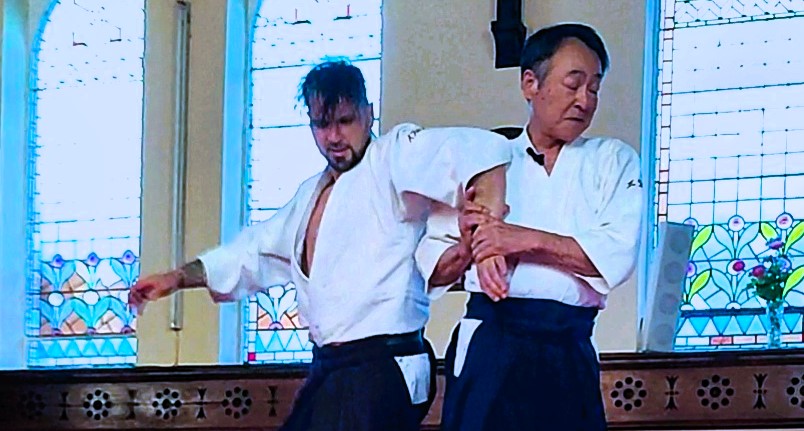
Advice to Ukes'
(make sure they are reminded as to what the attack should be):

Ukes must make sure you know which attacks are expected and what the attack should be. Candidates' grading expect energy from their uke - so they have have something to work with. Here are some reminders that also should be regarded as acting as a prompt for Tori as well.

It is unsettling if Uke attacks doing something wrongly so some reminders are given below :-

  • Katadori Shomen-uchi: Grip and attack at same time. It is one combined attack. Preference is to receive the Shomen and return, rather than direct. Or project into Kokyu.

  • Grabs reminder:-
  •     Grab - Ryokatadori   Grab to both shoulders - usually Ushiro.
        Grab - Katadori       Grab to shoulder.
        Grab - Sodedori     Grip to elbow / Sleeve.

  • Jiyuwaza / Randori - uke normally is restricted to to one attack type but tauri can deliver either technique or kokyunage.

  • Futarigake - Start with simultaneous (2-man) attack

  • Taninzugake - whilst this is a three person attack - it has been set to start from 3rd attacker coming in from rear grabbing wrist and around neck then move on to freestyle multiple attacks.


Hints to Tori

Hanmi Handachi Katatedori: Show Shihonage variations. Don't forget the Kesa cut – to start.

Show Kaiten nage variations (Soto & Uchi)


"Likely Items 2025??" is a list of what arose in the Dan Grading 2024, including these that were particularly singled out before the grading, which were:

  • Katadori shomenuchi - kokyunage, kotegaeshi, shihonage, ikkyo
  • Katate dori ushiro erijime - kokyunage and ikkyo.
  • Ushiro daikikae - bear hug from behind - just kokyunage

Of course there is no guarantee of these coming up again!.


Technical Director at Marple Dojo